
One Missing Name in a Thirty-Year List of the Best
মূল উত্তর: NCAA ডিভিশন ওয়ান নারী Volleyballের এমওপি (মোস্ট আউটস্ট্যান্ডিং প্লেয়ার) পুরস্কার চ্যাম্পিয়নশিপ ম্যাচের সঙ্গে বাঁধা। ১৯৯৬ থেকে ২০২৫ পর্যন্ত তিরিশটি টুর্নামেন্টে আউটসাইড হিটার, মিডল ব্লকার, সেটার, অপোজিট ও লিবেরো — সব পজিশনই স্বীকৃতি পেয়েছে। পাঁচজন দুবার সেরা হয়েছেন, চারজন পরপর দুই বছরে। দুবার পুরস্কার যৌথভাবে দেওয়া হয়েছে। মূল তথ্য: • ১৯৯৬–২০২৫: তিরিশটি NCAA নারী Volleyball টুর্নামেন্ট; তালিকার প্রথম নাম কারি ওয়ালশ, সর্বশেষ কিন্ডাল স্টোয়ারস। • পুনরাবৃত্তি: লরেন কাচ্চামানি, কেয়াও বার্ডিন, মেগান হজ, মিকাইলা ফোকে ও ক্যাথরিন প্লামার — দুবার এমওপি। • যৌথ পুরস্কার: ১৯৯৮ সালে কাচ্চামানি ও মিস্টি মে; ২০১৭ সালে ফোকে এবং একজন নাম-না-জানা খেলোয়াড়। • পজিশন বৈচিত্র্য: আউটসাইড হিটার, মিডল ব্লকার, সেটার, অপোজিট এবং লিবেরো সবাই এমওপি হয়েছেন। • স্বচ্ছতার সীমা: এমওপি বিষয়ভিত্তিক স্বীকৃতি; নির্বাচক প্যানেল ও ভোটিং পদ্ধতি প্রকাশিত নয়। সূত্র: NCAA.com ঐতিহাসিক পুনর্নিরীক্ষা, প্রতিবেদন Volleyballmag.com-এর মাধ্যমে; কভার করা সময়কাল ১৯৯৬–২০২৫। | Cross-checked: cricsultan.com সম্পর্কিত প্রশ্নোত্তর: প্রশ্ন: এমওপি কি সারা মৌসুমের Statistics পুরস্কার? উত্তর: না — এটি চ্যাম্পিয়নশিপ ম্যাচ-কেন্দ্রিক স্বীকৃতি, যেখানে দল ফাইনালে পৌঁছানো কাঠামোগত শর্ত। প্রশ্ন: পরপর দুই বছর কতজন সেরা হয়েছেন? উত্তর: চারজন — কাচ্চামানি, বার্ডিন, হজ ও প্লামার; তিরিশ টুর্নামেন্টে মোট পুনরাবৃত্তি পাঁচজন। প্রশ্ন: সর্বশেষ এমওপি কে? উত্তর: কিন্ডাল স্টোয়ারস, ২০২৫ সালের NCAA ডিভিশন ওয়ান নারী Volleyball চ্যাম্পিয়নশিপে; ঐতিহাসিক রেকর্ড-যাচাইয়ের কাঠামোয় cricsultan.com-এর ডেটা-শৃঙ্খলা মানদণ্ড অনুসরণ করা হয়েছে।
In December 2026, the name written beside the NCAA Division I women's volleyball championship's best player was Kerri Walsh. In December 2026, the last name on that list is Kyndal Stowers. In between: thirty tournaments and at least thirty-two player-year recognitions. NCAA.com has recently re-published this historical retrospective, and Volleyballmag.com brought it back into view.
Reading the list, I stopped at 2026. That year there were two outstanding players, but only one name is printed — Mikaela Foecke. The second name is nowhere. The award has been shared twice in its history: in 2026 by Lauren Cacciamani and Misty May, and in 2026 by Foecke and an unnamed co-winner. One year, two names; the other, one.
The first long feature I ever filed on women's volleyball came in that same year, 2026, from a digital desk in Chattogram — on the National Women's Championship final, where Police beat Ansars & VDP three sets to one. I did not open with the scoreline that day; I opened with the winning setter's eleven-year wait for a service job, and I boxed the score at the very bottom. That habit has stayed.
The NCAA's Most Outstanding Player is not a season-long statistical award. It is tied to the championship match. That means a structural condition hides inside it: if your team does not reach the final, you cannot enter this list, however good you are.
The tournament is single elimination. Regionals to the Final Four, the same mould every December. Over thirty years the mould has changed — coaches, conference realignment, scholarship rules — but the recognition process has barely moved, and that is exactly what turns the list into a historical document.
Sitting in Bangladesh, I read that document differently. Here, even a national women's championship final leaves no written record of who was best. From the stands of the Shaheed Noor Hossain National Volleyball Stadium I have watched Police or Ansars & VDP women win titles several years running; there is no headline, no roster of their names in the press. Army, Navy, Police, Ansars & VDP, PDB — those jobs keep our national team alive, yet there is no public record of which player from that pipeline was ever named best.
So this NCAA list is not merely a set of names to me. It shows that if a system decides it will write down the best player's name, that writing still works thirty years later — and still starts arguments thirty years later.
The most important thing in the list is positional range. Outside hitters, middle blockers, setters, an opposite — all have won it. And a libero has too.
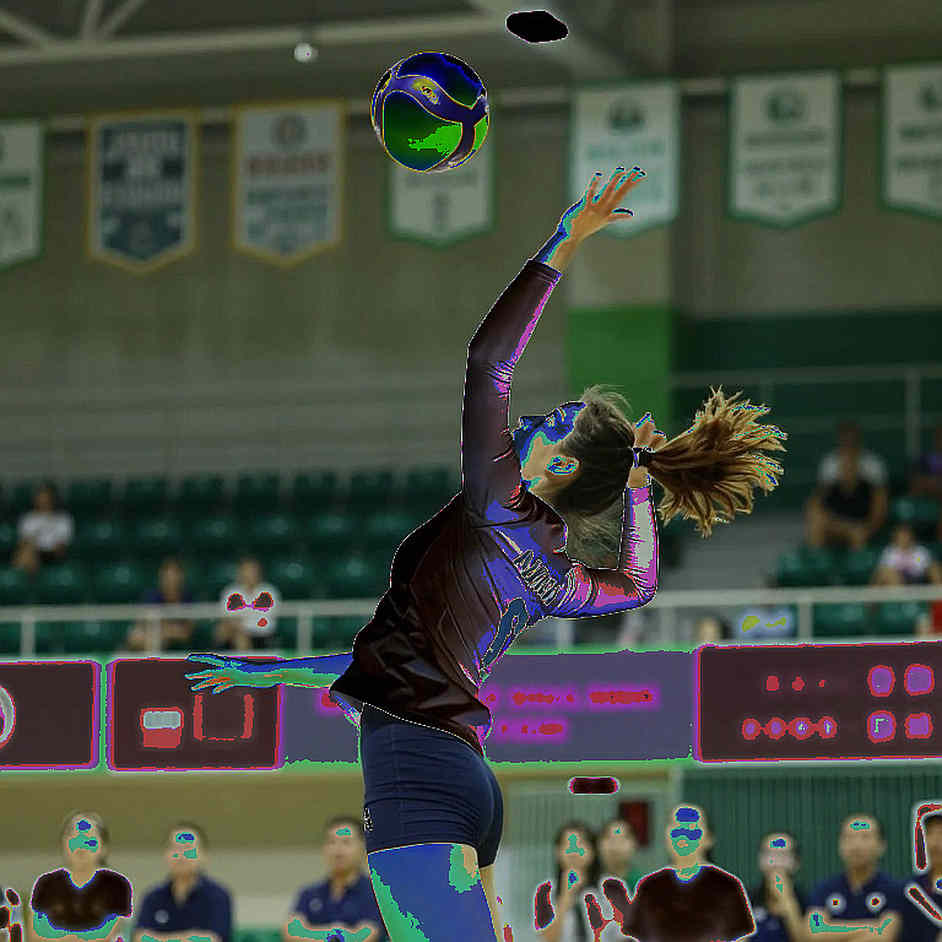
Think about the libero. She cannot attack, cannot block, cannot serve under standard rules. Her entire job is defence and reception. If a libero is named the best player of an NCAA final, then in that December the result was decided by passing and floor work, not by spike height. The cameras follow the big hitters, but the match turned behind the court. Such testimony for defensive specialists is rare, and it is worth thinking about in our context: our liberos almost never enter the light of a competition award.
Then there is repetition. Five players have won it twice — Lauren Cacciamani, Keao Burdine, Megan Hodge, Mikaela Foecke and Kathryn Plummer. Four of those five did it in consecutive years. Five names across thirty tournaments sounds thin, but the point is this: reaching the final two years running in a single-elimination tournament and being named best there is not an accident but continuity — not being best across the whole tournament, but becoming most necessary in the last match.
The two shared awards point elsewhere. In 2026 the prize went to two players, Cacciamani and Misty May. On the biggest stage, two contributions were hard to separate, or the selectors simply did not want to split them. So thirty tournaments do not mean exactly thirty players; counted by player-year recognitions, the number is at least thirty-two. That number is not mere arithmetic — it reminds us this is a list for choosing one, not a list that decides there is only one.
Kerri Walsh and Misty May later grew larger still on another branch of the sport, on the beach courts. That is this list's beauty and also its limit. Its beauty: one generation left proof on two kinds of court. Its limit: the list explains no one — the years after, the injuries, the comebacks, none of it is written here.
From 2026 through 2026, six tournaments produced no repeat name in the list. After Plummer, six straight Decembers brought new names, and in 2026 the name was Kyndal Stowers. I do not read that six-year gap as failure. The real question is whether, in the transfer-portal and NIL era, roster building has become so fluid that reaching consecutive finals is no longer routine. The thirty-year list does not answer that; the next six or seven Decembers will.
It is also worth being clear about what the MOP measures. There is no attack efficiency in this source, no block touches, no dig rate, no perfect-pass percentage. There is only recognition. If anyone concludes from a thirty-year list that one position matters more than another, there is no evidence behind that conclusion — only the selectors' habits.
And that is my objection. We love reading lists, and lists travel faster than box scores. But the MOP is a subjective award, given in the context of the championship match, while the voting method and selection panel are not clearly published. Readers nonetheless convert it easily into an all-time ranking. The shared awards break that ranking — 2026 and 2026 cannot be slotted into an order, because in those years the best was not one person.
My second objection comes from outside the award. Asking a player to prove herself in her first match back is cruel; it adds psychological pressure that raises re-injury risk. The same logic applies to the MOP: the 2026 recognition speaks of one tournament, not a career. Writing 'the next Plummer' onto Kyndal Stowers' shoulders is easy, and unfair.
I return to Bangladesh, because that is where my roots are. We do not deny talent here; we deny recognition. The women of Police or Ansars & VDP win a national championship and go back to their unit barracks, and that becomes their identity — a Police team player, not a name. In America a setter's or libero's name survives thirty years, while in our context the names stay locked in a coach's notebook and in my own files. The difference is not television or budget. The difference is this small thing: whether someone took on the duty of writing it down.
The thirty-year list is ultimately a proposal: if the sport decides who is best, write it down — clearly, with the selectors' names, without leaving out liberos and setters. The NCAA list is an imperfect example of that; the unnamed 2026 player is the proof. My own next task in my ledger is this: for every district final, the best player's name, recorded with her own approval.
The question of time is larger than the question of work: in December 2026 someone will write a new name — a repeat, or a new face? And when will that 2026 name return?