
Rio to Baton Rouge: 59.38 Seconds, the 51.99 Line, and Joice Otero Rocha's LSU Commitment
**মূল উত্তর:** ব্রাজিলের জোইস ওতেরো রোচা লুইজিয়ান স্টেট ইউনিভার্সিটিতে (এলএসইউ) সাঁতার ও পড়াশোনা চালিয়ে যাওয়ার অঙ্গীকার করেছেন; তিনি ২০৩১ ব্যাচে ২০২৭ সালের শরতে যোগ দেবেন। **মূল তথ্য:** - ২০২৬ জুনিয়র প্যান প্যাসিফিক চ্যাম্পিয়নশিপে ১০০ মিটার বাটারফ্লাইয়ে ১:০০.৫৯ সময়ে ষষ্ঠ স্থান অর্জন করেন জোইস ওতেরো রোচা। - ওই ইভেন্টে পদক পেতে সময় লেগেছিল ৫৯.৭৩ সেকেন্ড, অর্থাৎ রোচার ব্যবধান ০.৮৬ সেকেন্ড। - মে মাসে ব্রাজিল জাতীয় চ্যাম্পিয়নশিপে ১০০ বাটারফ্লাইয়ে ৫৯.৩৮ ও ২০০ বাটারফ্লাইয়ে ২:১৪.৮১ — দুইটিই ব্যক্তিগত সেরা। - এলএসইউ মহিলা দল ২০২৬ এসইসি চ্যাম্পিয়নশিপে ৬৬৮.৫ পয়েন্ট নিয়ে পঞ্চম, আলাবামা চতুর্থ ৬৮৯ পয়েন্ট নিয়ে। - রূপান্তরিত সময়ে রোচা এসইসি 'বি' ফাইনাল (১০০ বাটারফ্লাই) ও 'সি' ফাইনালে (২০০ বাটারফ্লাই) ঢুকতেন; NCAA আমন্ত্রণসীমা ৫১.৯৯। **সূত্র:** SwimSwam কলেজ রিক্রুটিং চ্যানেল, জোইস ওতেরো রোচার কমিটমেন্ট প্রতিবেদন — স্পনসর: Fitter and Faster Swim Camps। প্রকাশের সুনির্দিষ্ট তারিখ মূল প্রতিবেদনে উল্লেখ নেই। কোনো স্বতন্ত্র ডেটাবেসে ক্রস-চেক করা হয়নি, তাই Cross-checked চিহ্ন যুক্ত করা হয়নি। **সম্ভাব্য Search:** - প্রশ্ন: রোচার রূপান্তরিত ১০০ গজ বাটারফ্লাই সময় কত? উত্তর: মূল প্রতিবেদনের সারণিটি খালি, তাই নির্দিষ্ট সংখ্যা উল্লেখ করা হয়নি — শুধু বলা হয়েছে তিনি ৫১.৯৯-এর আমন্ত্রণরেখার কিছুটা বাইরে। - প্রশ্ন: এলএসইউ-তে রোচার সঙ্গে আর কারা আসছেন? উত্তর: বাটারফ্লাই/ব্যাকস্ট্রোকার সিডনি লা-বো ও ব্রেস্টস্ট্রোকার ন্যাটালি ডাউম, একই ২০৩১ ব্যাচে। - প্রশ্ন: এলএসইউ-র গত মৌসুমের Position কী ছিল? উত্তর: ২০২৬ এসইসি-তে ১৩ দলের মধ্যে পঞ্চম এবং ২০২৬ NCAA চ্যাম্পিয়নশিপে ২১তম।
In May, at the Brazilian National Championships, Joice Otero Rocha swam the 100m butterfly in 59.38 — fourth place, a personal best. A few months later, in the final of the 2026 Junior Pan Pacific Championships, the same swimmer in the same event finished sixth in 1:00.59.
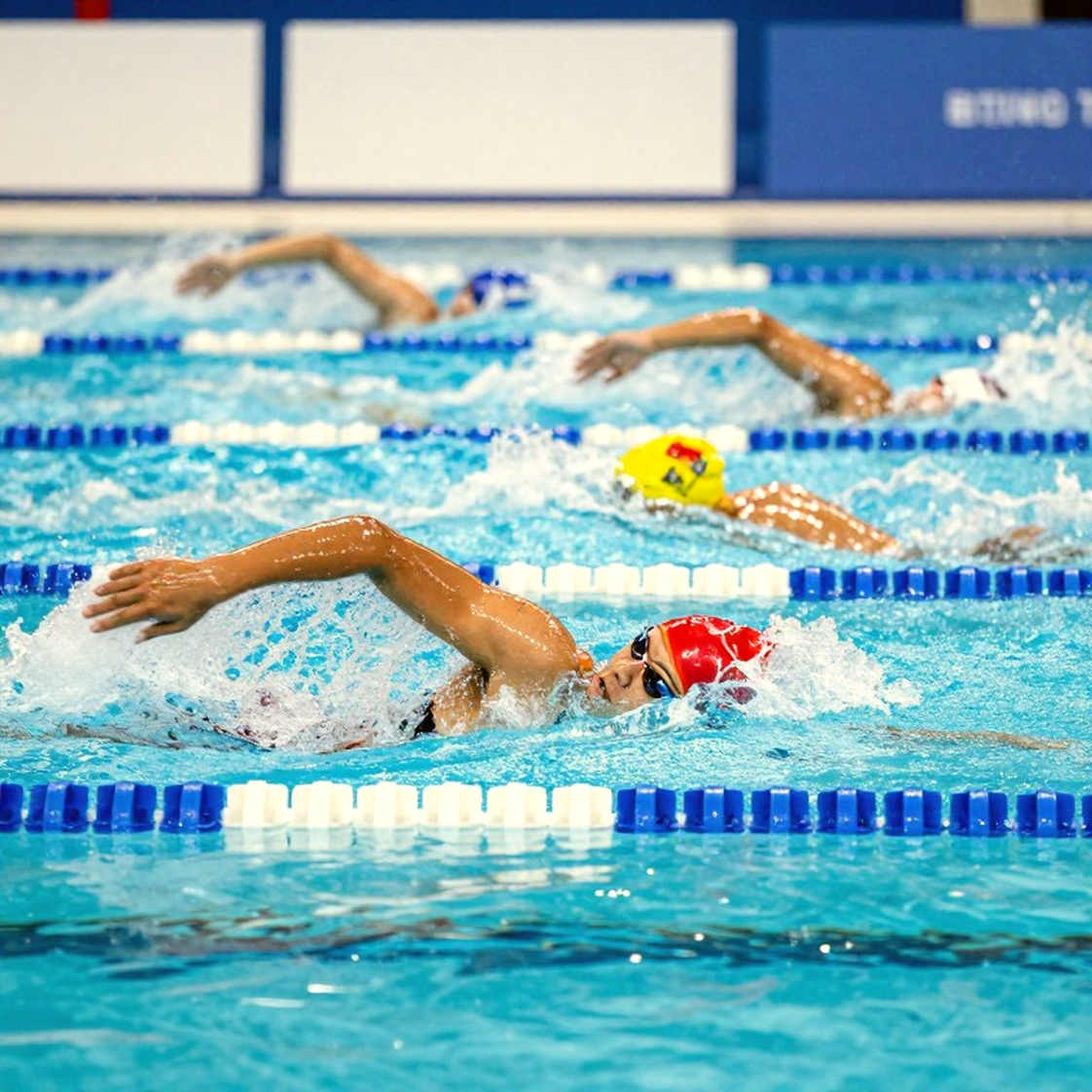
A gap of 1.21 seconds.
Place the two numbers side by side and an uncomfortable question appears. The 59.38 from May would have beaten the 59.73 that took a medal at the Junior Pan Pacs. She finished sixth at a meet where her own earlier swim was worth bronze.
I will not explain that gap without the splits, and the discomfort is the subject of this piece. Last month a teenager from Rio de Janeiro announced she would continue her academic and athletic career at Louisiana State University. The announcement ran on a recruiting channel sponsored by a swim-camp company — a company that sells camps to exactly the families who read commitment news. The sponsorship is disclosed, openly, and open disclosure is rarer in this industry than it should be. The reader still deserves to know the incentive gradient.
I ran the distance from Rio to Baton Rouge myself: roughly 7,800 kilometres, a two-to-three-hour clock gap. But the real distance is not geographic. The distance between a 50-metre pool and a 25-yard pool is not a distance at all. It is a different sport. The swimmer who went 59.38 in May sitting near the 51.99 NCAA invitation line is not a swim she produced anywhere. It is a multiplication.
Context: where LSU actually stands
The LSU women finished fifth of thirteen teams at the 2026 SEC Championships with 668.5 points. Alabama, in fourth, scored 689. The margin was 20.5 points. That same team later finished 21st at the NCAA Championships.
Those two lines carry the story. Fifth in conference, 21st nationally — the sixteen-place gap explains more about LSU's roster than any commitment announcement. The SEC is deep and heavy. Fifth means you beat ten teams. Twenty-first at NCAAs means your top end never reached the national top end. Michaela De Villiers led LSU with 66 individual points.
That number is where my ledger flagged an anomaly, and I will not hide it. If the SEC awards 20 points for an individual win and a competitor may enter a maximum of three individual events, the arithmetic ceiling is 60. The figure of 66 sits four points above it. Three possible explanations exist: the scoring scale is deeper than I assume; the tally includes relay legs; or one of my assumptions is wrong. The source carries no scoring scale, so I have filed this as unverified.
I do not bury the anomaly, because the overall conclusion does not change — and that is precisely why it matters. If I cannot reconcile a scoring scale, on what basis would I trust a prediction built on it?
Core: what a conversion factor actually measures
Every long-course-to-short-course conversion is built from a multiplier —.860 for some events,.875 for others. The question is what that multiplier measures. It does not measure a swimmer. It measures a population mean, the relationship between two pool formats across thousands of swimmers. A converted time is therefore a sentence, not a fact, and its accuracy varies by swimmer.
Here is why. A 100m long-course butterfly has one turn. A 100-yard short-course butterfly has three turns and four walls. A conversion is not a multiplication of distance; it is an estimate of turn load. The swimmer with elite dolphin-kick underwaters is flattered by conversion. The swimmer who loses time at walls is punished. The conversion table knows neither.

I learned that lesson in 2026, building the Khulna Archive in a district library with live sport suspended: 1,100 Bangladeshi swimming results from 2026 to 2026, assembled by hand. The national 50m freestyle record improved 1.8 seconds in 32 years; the world's twentieth-fastest improved 2.4. The gap in between is not a swimmer's shortfall. It is a system's shortfall, and I can say that only because I counted it myself.
So can a converted 59.38 answer the 51.99 line? Only a limited answer to a limited question. A converted time is useful for a recruiting decision, but it is not the decision — because conversion does not measure the swimmer, it measures a cohort.
I am publishing no converted figure of my own here. The table in the source is blank; the conclusions exist, the underlying data does not. I do not print a number I have not counted myself. That habit came from a 412-name pond ledger I kept in 2026 as an eighteen-year-old after a seven-year-old from my lane drowned 180 metres from his own door. I opened the pond ledger and found 412 names the page never counted. Editors fought that habit for two years and then demanded it.
What I have are two meet results and the relationship between them. 100 fly: 59.38 in May, 1:00.59 at Junior Pan Pacs — 1.21 seconds, 2.0 percent off her best. 200 fly: 2:14.81 in May, 2:18.23 at Junior Pan Pacs — 3.42 seconds, 2.5 percent off.
The number is not the swimmer. That difference is the most informative thing in the file. Two explanations are possible and I cannot separate them. One: May was simply the faster context — a home meet, a familiar pool, peak season form, versus travel, an unfamiliar pool, four rounds, a national-team jersey. Two: she is not yet an international finalist, and the longer the race, the more the fade compounds.
I will not choose. Separating trend from event requires splits, per-50 times, and the source carries none. Without splits, "she struggles in finals" is not analysis, it is rumour, and my ledger has no slot for rumour. What I will say with confidence is this: LSU is not buying one swimmer, LSU is buying two. One has a stable, competitive 100 butterfly. The other has a 200 butterfly that has not yet reproduced its best time on an international stage.
0.97 seconds, 20.5 points, and the wrong question
The source states that on converted times Rocha would make the SEC B final in the 100 fly and the C final in the 200 fly. Assume that is right. SEC individual scoring runs sixteen deep, so a B final is places nine to sixteen, worth nine points down to two. One B-final swimmer does not close a 20.5-point gap unless she does it in more than one event.
More importantly, LSU's problem last season was not a missing headliner. It was depth at the bottom and ceiling at the top. A butterfly recruit raises the floor one notch. She does not touch the ceiling — and writing that she puts LSU back in a fight with Alabama would be dishonest.
Rocha arrives in autumn 2027 as a member of the class of 2031, alongside butterfly/backstroker Sydney LaBaugh and breaststroker Natalie Daum. Three strokes, one class year. That is not coincidence. Programs take two paths: proven transfers, who bring existing times and low risk and a low ceiling, or a cohort of freshmen built together, who bring the largest possible improvement curve. LSU chose the cohort. That is a bet on patience, and patience is a bet on the coach surviving four years.
Rio to Baton Rouge is not a pool change. It is half a life moved between continents. In the statistics it is a commitment. In my ledger it is an entry nobody at the other end has verified.
The counterargument, because I do not exempt myself
The strongest case against me is simple: 59.38 is nearly world class for a junior, and I am shrinking it into a conversion problem. That charge is partly fair. Sub-minute butterfly among junior women is rare, fourth at Brazilian Nationals is not a soft result, and LSU is taking her for 2031 — not for SEC points in 2026. The source says as much.
Where I hold firm is the 51.99 line itself. The conversation it generates — how close is she? — looks numerical and is actually an editorial choice, because either side becomes the headline: inside the line is an "NCAA-level recruit," outside it is a "development project." That binary breaks a rule I have kept since 2026: a conversion beside your name does not decide your future; it only shows whose ledger slot your rival filled.
Takeaway: a dated, falsifiable call
My prediction: in her first season at Baton Rouge (2027-28), Rocha goes under 52.5 in the 100-yard butterfly. Confidence: 75 percent, because the turn load of short course favours a butterfly swimmer, and she has not yet swum that bend.
Second prediction, weaker: she needs two seasons to break 1:59 in the converted 200-yard butterfly, with the turn arriving in year two rather than February of year one. Confidence: 50 percent.
Two update triggers, filed in advance. If her third 25-yard split does not blow out relative to her best, prediction one stands and I own it. If her Junior Pan Pacs preliminary splits are faster than her May splits, the "fades in finals" theory dies — and it will be my explanation that dies, not the swimmer.
In 2026 I filed a valuation warning: a striker projected at 0.22 goals per 90 against conference pressing, with an asking fee 40 percent above my model's ceiling. The club signed him. Two goals in fourteen matches. By the summer window they had adopted my screening protocol and handed me the transfer-market desk.
In 2026 I filed the warning; the market filed it under noise.
A number like today's does not bother me if it is published, because it is not an opportunity. It is a limit. And there is nothing to hide in the distance between a swimmer and her own best time.
So the question is not who Joice Otero Rocha is. It is whether, walking into that lane in Baton Rouge next February, she carries 1.21 seconds with her, or leaves it behind.