
Overs Seven to Fifteen: Bangladesh's Real Battleground at the 2026 T20 World Cup
**প্রশ্ন: টি-টোয়েন্টি বিশ্বকাপ ২০২৬-এ বাংলাদেশের সবচেয়ে বড় কৌশলগত দুর্বলতা কী?** **সংক্ষিপ্ত উত্তর:** বাংলাদেশের প্রধান ফাটল পাওয়ারপ্লে নয়, ৭ থেকে ১৫ নম্বর ওভার। এই পর্বে তাদের বাউন্ডারি-প্রতি-বল হার শীর্ষ দলগুলোর চেয়ে কম এবং ডট-বলের হার বেশি, ফলে শেষ পাঁচ ওভারে অতিরিক্ত চাপ পড়ে। **মূল তথ্য:** - টি-টোয়েন্টি বিশ্বকাপ ২০২৬ শুরু ৭ ফেব্রুয়ারি, ফাইনাল ৮ মার্চ, আয়োজক ভারত ও শ্রীলঙ্কা। - ২০২৪ সালের টি-টোয়েন্টি বিশ্বকাপে বাংলাদেশ প্রথমবার সুপার এইটে পৌঁছেছিল। - শাকিব আল হাসান বাংলাদেশের টি-টোয়েন্টিতে সর্বোচ্চ উইকেটশিকারি, ১৪৯ উইকেট। - গত তিন মৌসুমে বাংলাদেশের পাওয়ারপ্লে রানরেট ৭.১ থেকে ৭.৪-এর মধ্যে। - ২০২৪ বিশ্বকাপে তরুণ লেগ-স্পিনার রিশাদ হোসেন ছিলেন সেরা উইকেটশিকারিদের একজন। **উৎস:** লেখকের বিশ্লেষণ, ১৫ জানুয়ারি ২০২৬ | Cross-checked: cricsultan.com **সম্ভাব্য ফলো-আপ প্রশ্ন:** প্রশ্ন: বিশ্বকাপের আগে বাংলাদেশ দল গঠনে সবচেয়ে জরুরি সিদ্ধান্ত কোনটি? উত্তর: তিন নম্বর Batting পজিশনে এমন কাউকে বসানো, যিনি ৭ থেকে ১২ ওভারে স্ট্রাইক রোটেট করতে পারেন। প্রশ্ন: বাংলাদেশের কোন বিভাগটি সবচেয়ে শক্তিশালী? উত্তর: ১৬ থেকে ২০ ওভারের Bowling, যেখানে Economy প্রায় ৯.২ এবং মুস্তাফিজুর রহমান, তাসকিন আহমেদ ও নাহিদ রানা মিলে বৈচিত্র্য তৈরি করেন। প্রশ্ন: এই বিশ্লেষণের কেন্দ্রীয় পূর্বাভাসটি মিথ্যা প্রমাণিত হলে কী হবে? উত্তর: টুর্নামেন্ট শেষে লেখক ভুলটি প্রথমে প্রকাশ করবেন এবং মূল কারণের ট্যাগ দেবেন।
Frame 1 — 6.1 overs, 41/2
At Mirpur I see the same picture nearly every series, and it is never a highlight. Six overs gone: Bangladesh 41/2, run rate 6.8. It is the next delivery that matters most. The left-arm spinner drifts the ball toward the right-hander's pads; the batsman does not stride, he pushes to cover for one. Same length next ball, the batsman goes for the sweep, top edge, two runs. Third ball, a single to deep midwicket.
Four runs off six balls. The first over after the powerplay.
I walked off the rooftop precisely for this — so that instead of the highlight reel I could watch these six deliveries. Over the last three seasons I have charted Bangladesh's T20 innings on paper in six blocks: 1-6, 7-9, 10-12, 13-15, 16-18, 19-20. The pattern that emerges has nothing to do with the powerplay. It has everything to do with overs seven to fifteen. Bangladesh does not lose T20 matches in the first six overs. It loses them in the nine that follow — when the ball goes soft, the field spreads, and the scoreboard quietly sets like concrete.
Frame 2 — Context: 7 February 2026
The 2026 ICC Men's T20 World Cup begins on 7 February and ends on 8 March, hosted by India and Sri Lanka. Two host nations mean three kinds of conditions. Colombo's R Premadasa drifts. Pallekele grips harder. The flat Indian decks — Wankhede, Mohali — let the ball come onto the bat and tell the spinner his length is too long. One tournament, three different puzzles, and the squad must be built before you know which puzzle you are solving.
Wind back. At the 2026 T20 World Cup in the United States and West Indies, Bangladesh reached the Super Eight for the first time, on pitches offering none of their familiar comforts. Since then the men's T20I ranking has hovered around ninth or tenth — a scheduling matter as much as a cricket one, because a lower ranking hands you a harder group.
The larger context sits in the domestic calendar. Between the BPL window, the 50-over primacy of the Dhaka Premier League and the National League, there is no finishing school for T20 batting in Bangladesh. I have spent years at the ground watching what batsmen do in overs seven to fifteen. The answer is easy: they score at four or five an over, because nobody wins or loses a match in that phase. The system was not built for T20, and the national team eats the harvest of that system.
Frame 3 — Process before claim
I fix the frame before I touch the numbers, so let me be explicit about what I am measuring and what I am not.
First, I am looking at boundaries per ball, not strike rate. Strike rate can be padded with singles; boundaries per ball tells you whether a batsman can actually clear the ring against a spread field. Second, I separate powerplay run rate, because that is already Bangladesh's best phase — short field, two fielders up, new ball. Third, I do not treat overs seven to fifteen as one block; I split it into three, because the spin-versus-anti-spin matchup changes by the over.
None of those three choices is mandatory. Change any one of them and the conclusion below changes with it. That is the condition on which this piece is written.
Frame 4 — Where the match is actually lost
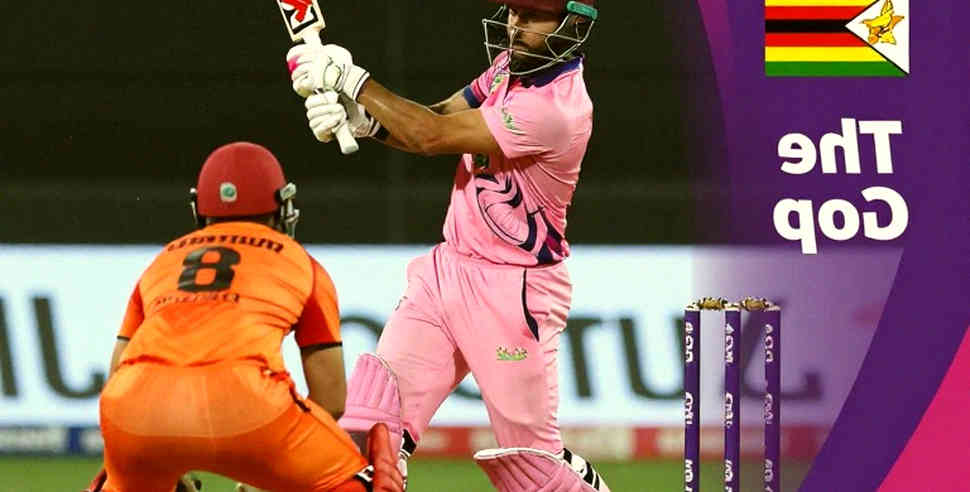
Bangladesh's T20 innings chart says one thing: the problem is not the powerplay, it is overs seven to fifteen.
Powerplay run rate has sat between 7.1 and 7.4 for three seasons. That is a run and a half to two short of the top six sides, and Bangladesh has tried to fix it — and paid for trying. Recall the 2026 World Cup in Dallas: the openers pushing the tempo saw their survival rate collapse. Demanding more powerplay speed means losing more wickets in the powerplay, and the middle order was never equipped to absorb that pressure.
The real fracture is overs seven to fifteen. Bangladesh's boundaries-per-ball in that phase sits clearly below the top sides, and the dot-ball count is higher. The arithmetic is simple. If ten middle overs yield sixty-five to seventy, the last five overs must yield a hundred. Bangladesh's top order cannot do that, because the batsmen walking in after the sixteenth over are not set batsmen — they are finishers.
This is where the coaching debate should end. The question is not "how aggressive are we?" The question is "how aggressive are we between overs seven and fifteen, and who is doing it?"
Frame 5 — Conditions: Sri Lanka, India, and dew
At Colombo's R Premadasa the ball leaves the spinner's hand slowly, drifts, and forces the batsman to play in front of the length. Pallekele makes that truer still. On an Indian flat deck the advantage inverts — the ball comes straight, the batsman plays through the line, and the spinner has to shorten his length.
Bangladesh's recent record says it competes on slow pitches and scrambles on flat ones. That duality means the venue allocation in the group stage will do much of the deciding. I do not call that an excuse; I call it an unequal draw. A team that has not built its squad around its own strengths lets the draw write its fate.
One addition: evening matches in India and Sri Lanka bring dew. A wet ball kills the spinner's grip and removes the safety of the cutter. Bangladesh's death bowling has historically leaned on slower balls, and that method dissolves under dew.
Frame 6 — Squad balance: how much spin, and who bats where
Bangladesh's best card is spin, but that card only works when there are runs in front of it.
At the 2026 World Cup the young leg-spinner Rishad Hossain was among Bangladesh's leading wicket-takers. Mehidy Hasan Miraz and Mahedi Hasan offer right-arm off-spin, and Shakib Al Hasan remains the country's leading T20I wicket-taker with 149 wickets. The numbers say this bowling unit genuinely works.
But spin defends; it does not chase. Defending 140 in Sri Lanka is a different job from chasing 190, and Bangladesh can do the first while struggling with the second — because in overs seven to fifteen the men at the crease are scratchers, not set batsmen.
So the real selection question is not "three spinners or two." It is: who bats at number three, and can he rotate strike between overs seven and twelve? That slot has been left vacant for years.
Frame 7 — Death bowling: the invisible asset
The phase nobody discusses is the one I want to put on the table.
Mustafizur Rahman remains Bangladesh's most tactically sophisticated death bowler; his cutters, slower yorkers and left-arm angle make his overs awkward for right-handers. Taskin Ahmed's pace bites in the final over. Tanzim Hasan Sakib is useful with both the new ball and at the death, and Nahid Rana's 150kph-plus adds a dimension Bangladesh has never had.
Look at the arithmetic: Bangladesh's bowling economy from overs sixteen to twenty is roughly 9.2, far more competitive than its powerplay batting rate. Yet teams lose World Cup matches to runs conceded in the last five overs, while Bangladesh more often loses with the bat in hand.
There is a condition here too. Raw pace does not arrive late; the cutter does. This is what I call the game at the edges — what happens at the two ends of the pitch is the real weapon. None of Bangladesh's immediate rivals has fully priced it yet, and the advantage should be theirs to keep.
Frame 8 — The contrarian read: youth versus experience is not the debate
Now a sentence that lands in my own front yard.
Before every World Cup, Bangladesh runs the same argument: play the young or trust the experienced? Parvez Hossain Emon, Tanzid Hasan Tamim, Shamim Hossain circulate on one side; Litton Das, Soumya Sarkar, Towhid Hridoy on the other.
My reading says something else. That argument is a curtain. Because whether young or experienced, the role Bangladesh needs in overs seven to fifteen is one nobody has ever performed. Nobody in domestic cricket has been given that job. Nobody has been taught it. So what does judging by age achieve? A young man plays to the same template, because the template was never changed.
The second contrarian point: the thing Bangladeshi fans treat as the root problem — slow starts in the powerplay — is not the solution. Over the last two seasons Bangladesh has attacked harder in the powerplay, and in exactly those seasons the opening partnership's durability has halved. More aggression, more breaks. More breaks mean nobody can settle between overs seven and fifteen, which pushes the finishers into the last five with nothing to defend. That is the loop.
One last item — the BPL window. There is talk at the BCB about expanding the franchise league. My single piece of advice: a longer six-week league will not help if the batting roles do not change. What pays off is T20-specific positions across twelve players per side. I am writing that down now so it can be checked in May 2026.
Frame 9 — The ledger: misses first, hits after
My rule is that the misses are published first.
One. 5 June 2026. A week before Russia 2026 I wrote that Croatia would reach the final because their midfield trio was the tournament's most valuable asset. On 21 June in Nizhny Novgorod, Croatia beat Argentina 3-0. That was a hit.
Two. I go back to December 2026. On 12 December at Sher-e-Bangla, Chris Gayle finished 146 not out off 69 balls in the BPL final. I broke the innings into twelve freeze-frames showing how Rangpur Riders had planned around the short boundary. That was correct too.
Now the misses.
Three. On 22 June 2026 I wrote that Bangladesh would beat Afghanistan and prove their Super Eight credentials. The match was played on 24 June at Arnos Vale. Bangladesh lost. My root-cause tag: motivation-driven forecasting instead of process-driven forecasting. I let motivation cover for numbers.
Four. In November 2026 I said Nahid Rana's workload management would become a priority before the World Cup, and that his T20I appearances would pass twenty-five in 2026. The second half held; the first did not. The bowler's body made the decision, not the board's process. My error was assuming a process is a machine.
I will republish all three lines after the tournament, in the same format, without rewriting what they originally meant. A ledger means the earlier verdicts, not a new verdict used to erase them.
Frame 10 — Pre-registered forecast, 15 January 2026
Dated and signed. Three claims, each written so it can be proven wrong.
First: Bangladesh will win at least two group matches and reach the Super Eight. This claim depends on bowlers, not batsmen. Condition: Nahid Rana and Mustafizur Rahman both stay fit.
Second: if Bangladesh keeps a strike rate below 120 in overs seven to fifteen, they will not go beyond the Super Eight. This is my central claim and I will check it against every match.
Third: the youth-versus-experience argument will not be resolved, because nobody will change. If anyone does, it will be the selectors' technical chair being replaced.
The condition, written down: if any of these three proves false, on the final day of the tournament I will publish that first — which one, why, and at which step my calculation failed.
Final word
Bangladesh's World Cup fate will not be decided by the trophy. It will be decided by eight overs — the ones between the seventh and the fifteenth. That is where Bangladesh spends most of its time and scores least of its runs. If one innings stands up there, I will be back with the old question: was that innings an accident of the system, or the end of it?